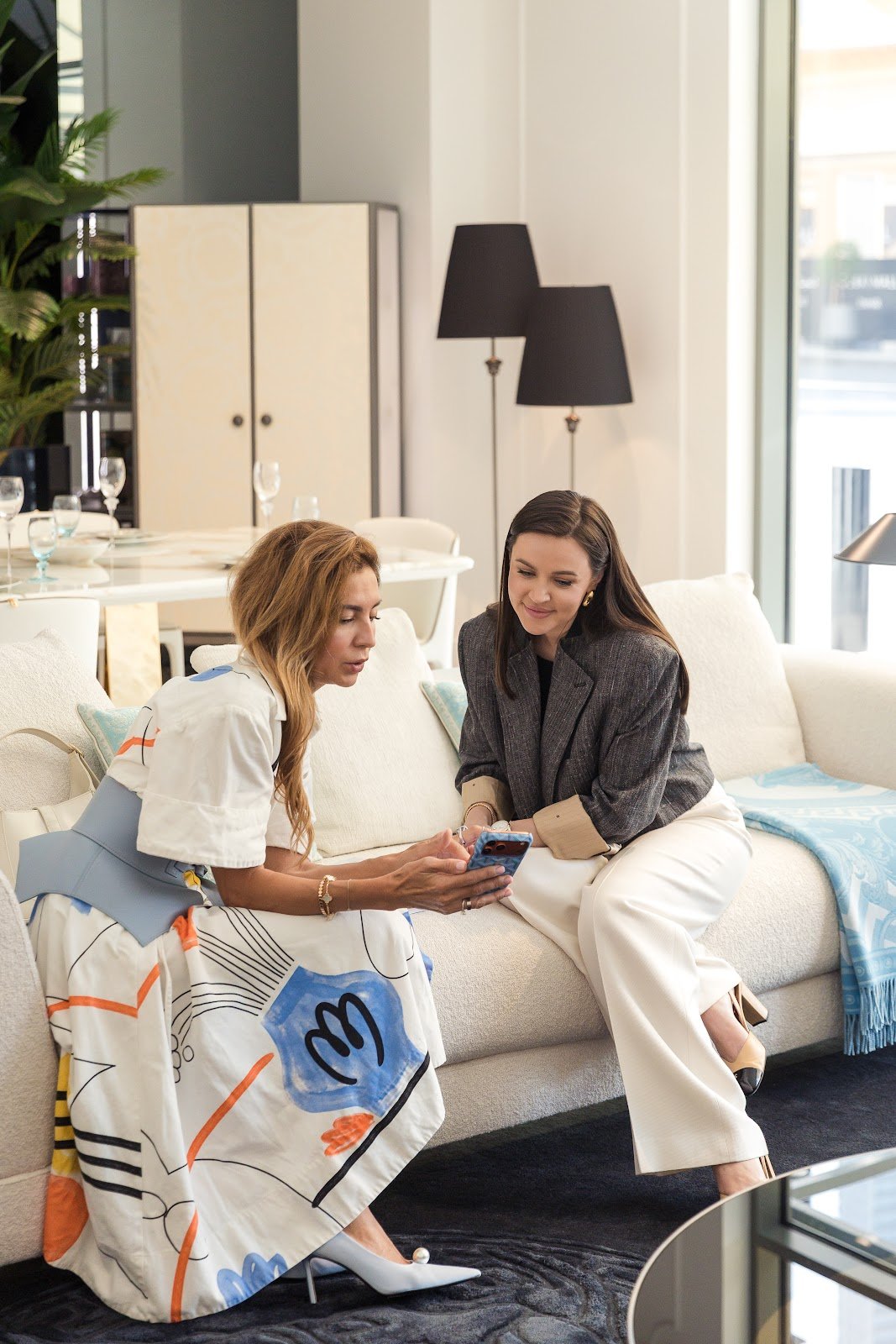
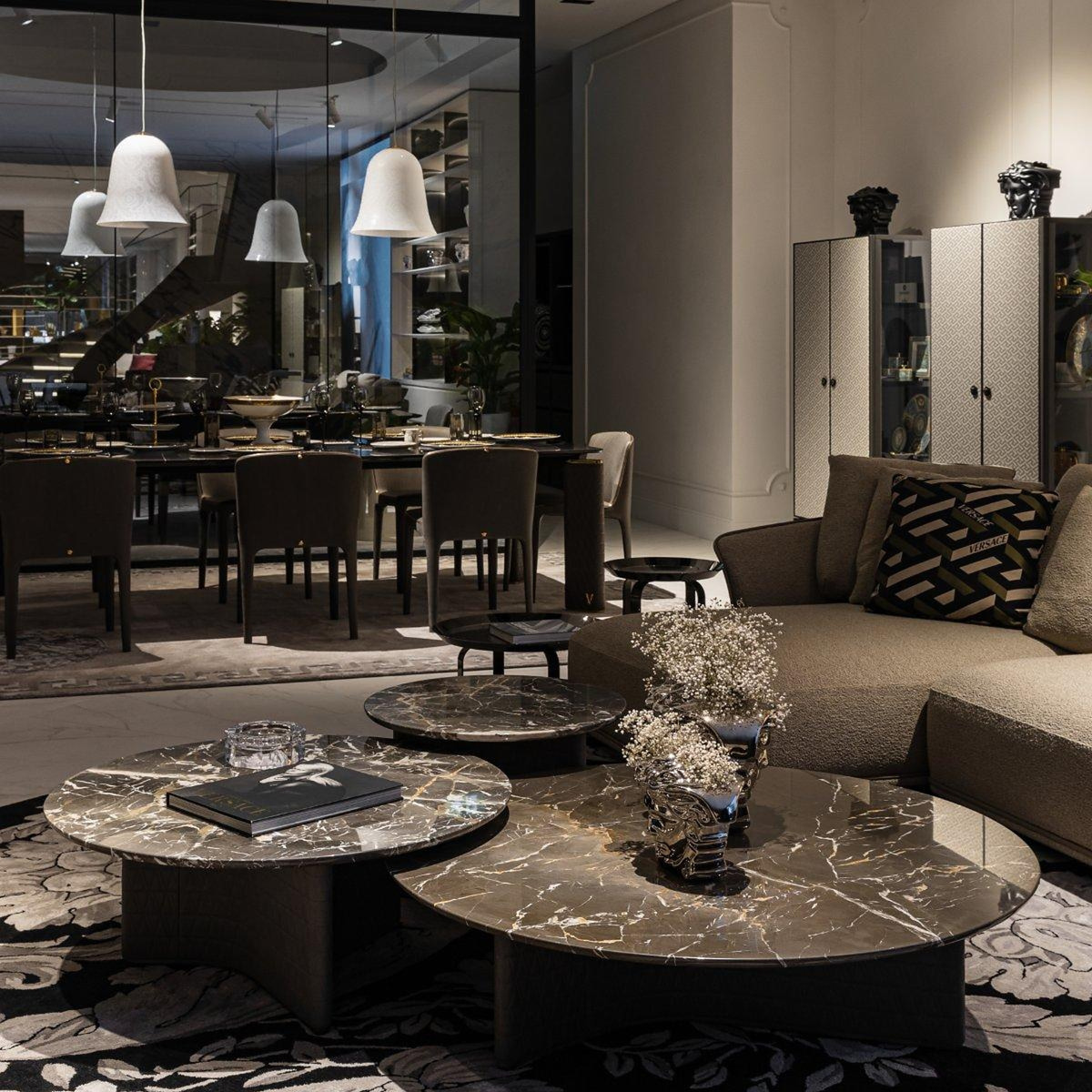
Picture a living room in Dubai Marina: floor-to-ceiling glass on one side, a kitchen island on the other, and one wall that can take a sofa. Most people start by asking how big a sofa will fit. A better question is how the room is used on an ordinary evening and where everyone wants to look. Here that might be the water at sunset, the television later, and each other when friends come over. A modular sofa works best when it answers all three without blocking the way to the balcony. If you are comparing an Italian sofa in Dubai, the sofa collection at Solomia Home is a good place to see how different systems solve the same room.
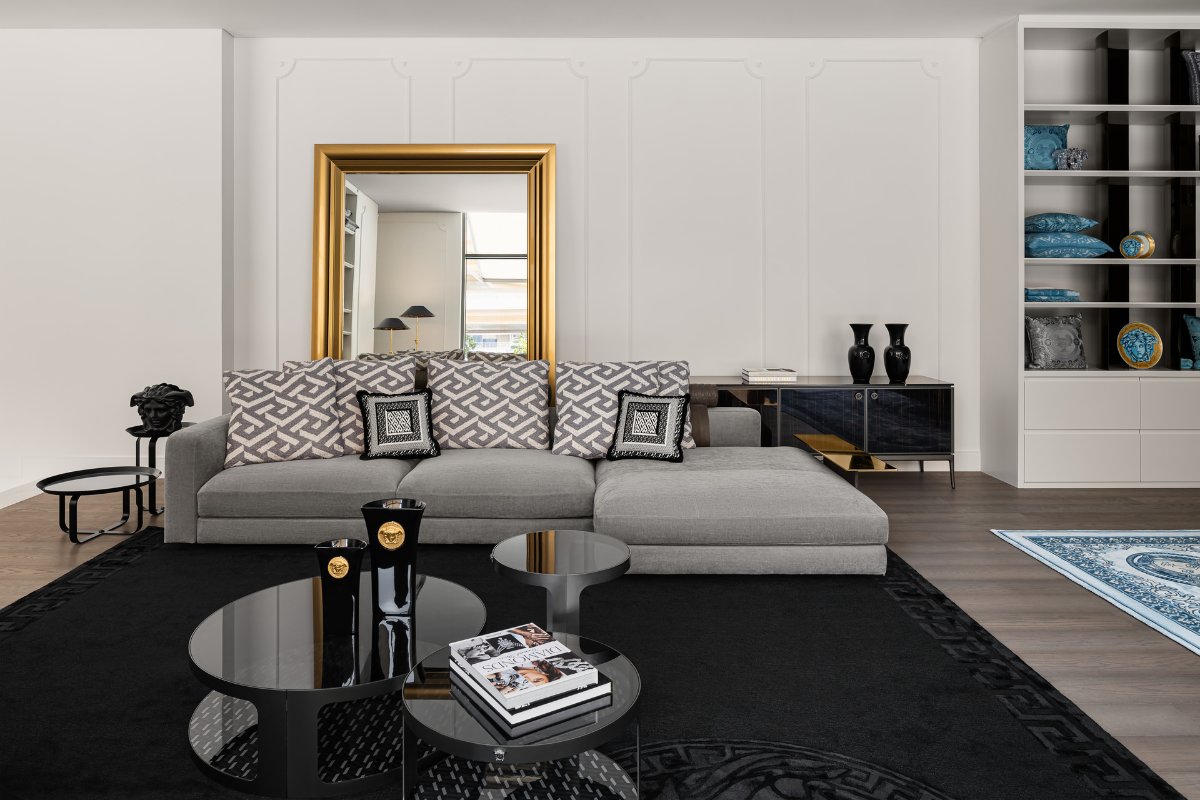
Start with the evening, not the catalogue
On a plan, mark the doors, balcony, television, windows, sockets and the routes people use every day. Include dining chairs when they are pulled out. Then write down who sits where: one person who likes to stretch out, two who prefer to sit upright, guests twice a month. That short list decides more than any photograph. It tells you whether you need a chaise, a corner, or a straight sofa with a separate armchair.
Mark the footprint on the floor with masking tape and live with it for a day or two. Walk to the balcony with a tray in your hands and open every door. Tape on the floor shows in a minute what a drawing hides: arms that project, the side table, the space needed to pass someone who is seated.
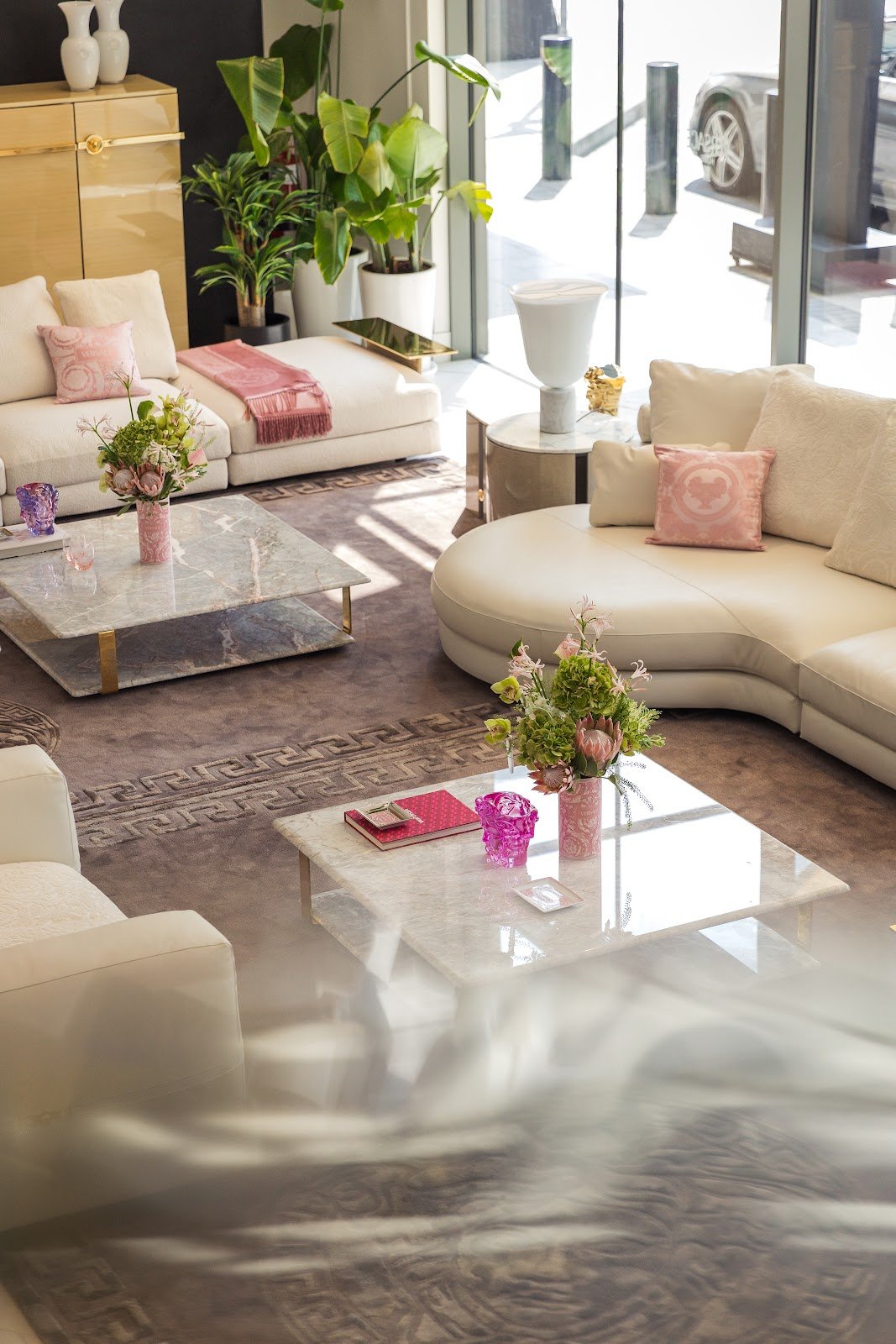
Apartment: one sofa, three jobs
In the Marina apartment, a deep L-shape would face the television but turn its back on the view and narrow the route to the balcony. A compact straight composition with one movable ottoman does more. A round pouf such as the Rugiano Dafne suits this role, because it can be approached from any side. In the evening the ottoman extends a seat for a film. When guests arrive, it moves to the other side of the coffee table and becomes a second side of the conversation. On a quiet morning it stands by the window. Check that the system you like really allows this, because some sofas look modular but are built from fixed elements.
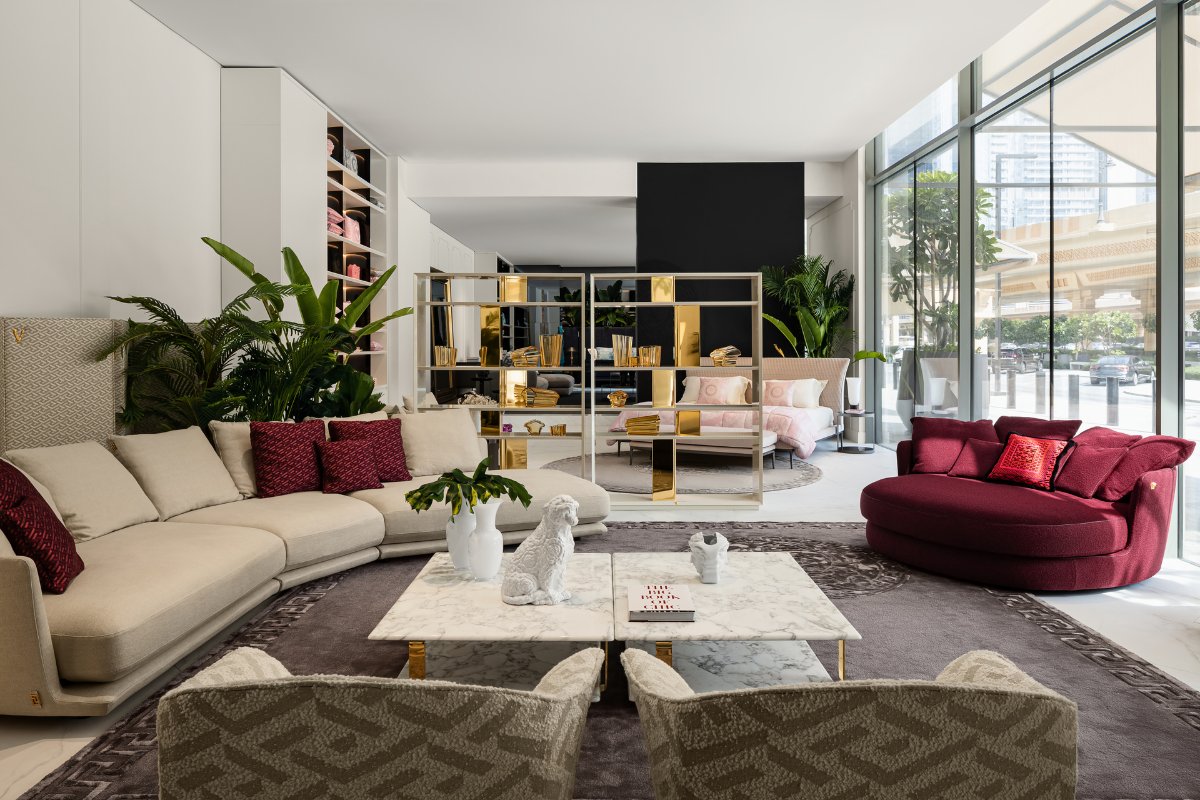
When a sofa stands in the middle of the room, its back becomes part of the view from the kitchen and the entrance. Look at the back, the joins between modules and the feet in exactly the configuration you are buying. In a Dubai tower, also measure the lift, the corridor and the apartment door before you choose. A sofa delivered in sections can be assembled in the room; a one-piece model cannot always get there.
Villa: two places to gather
A villa living room has the opposite problem. Sofas pushed against distant walls leave an empty centre, and conversation turns into calling across the room. Bring the modules into the middle and build one main group around a coffee table. Then add a pair of armchairs by the window as a second, quieter place to sit. A curved or open-ended composition can face the garden on one side and the guests on the other. The Sanders Air sofa by Ditre Italia is a good example: it is modular, and its backrests can be positioned freely, so one seat can look towards the garden and the next towards the room.
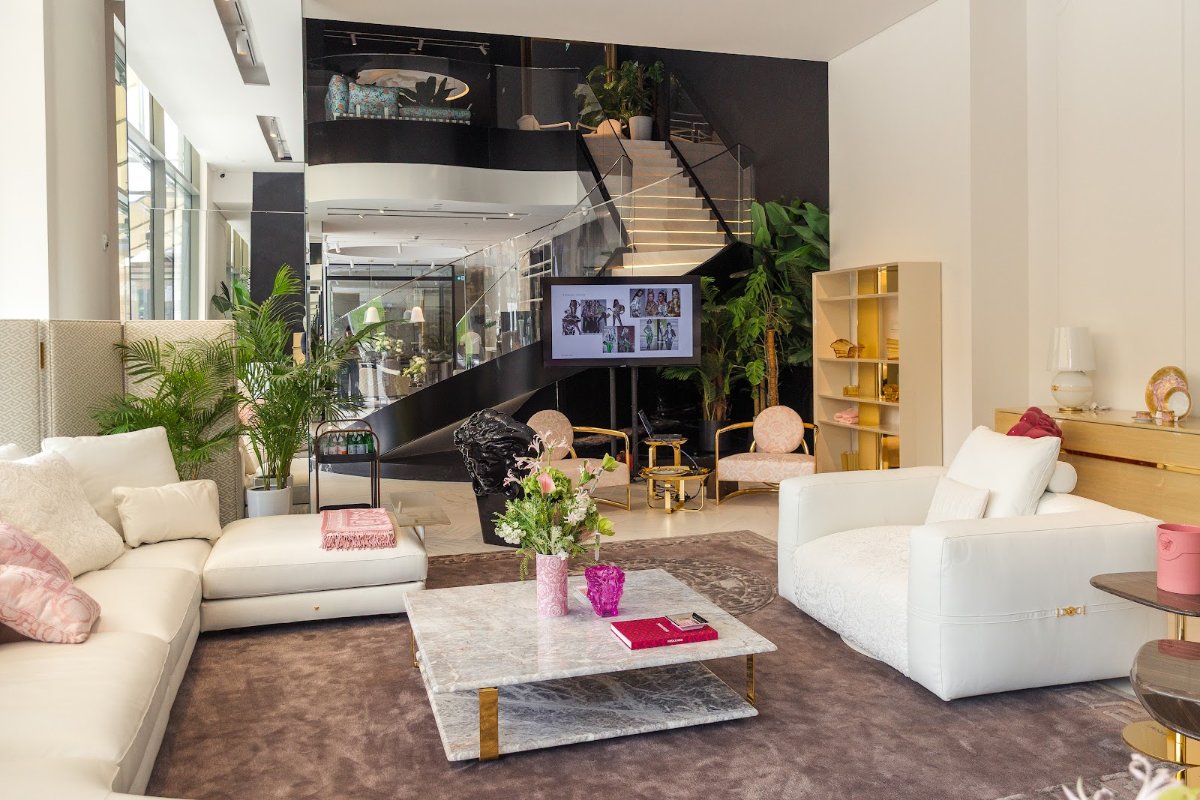
In an open living and dining space, the back of the sofa often divides the two zones, so look at it from the dining table. A low back keeps the view to the garden, while a higher one gives the seating area a sense of shelter. Try both on the plan and judge them from the doorway, the dining chair and the main seat.
Large compositions, such as B&B Italia's Camaleonda or the Pierre modular sofa, are made of corner, end and centre units that look alike in a photograph but sit in different positions. Ask the Solomia Home team for a configuration drawing that names every element, attached to the quotation, and check it against your plan before ordering. That way the sofa that arrives is the one you laid out.
Sit as you do at home
In the showroom, sit the way you will at home: upright for conversation, leaning back for a film, sideways with your feet up. Notice how easily you stand, where the back meets your shoulders and whether a deep seat needs an extra cushion behind you. A very soft seat feels welcoming for five minutes; stay for twenty and see whether it still supports you. Ask what the cushions are filled with and how they settle with use. The Aster modular sofa by Ceppi, for example, combines a goose-feather back with a memory-foam seat, so it is soft to lean on and firmer to sit on.
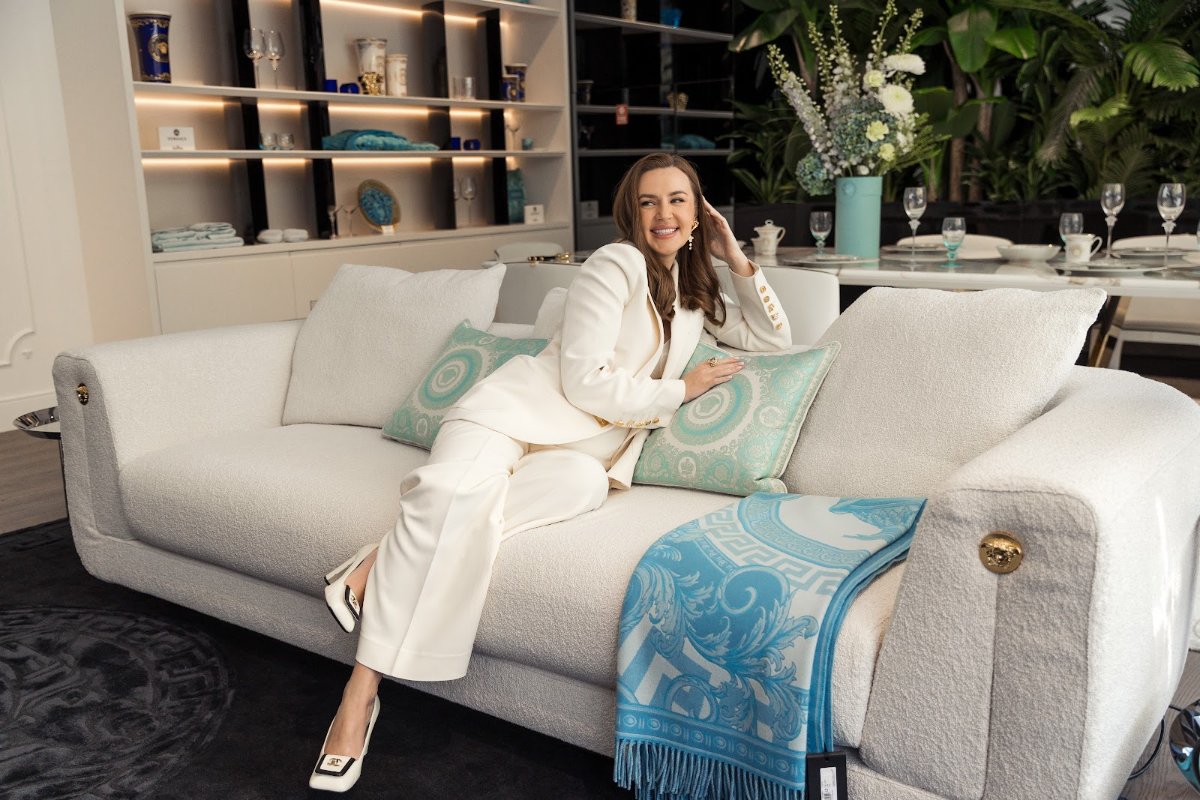
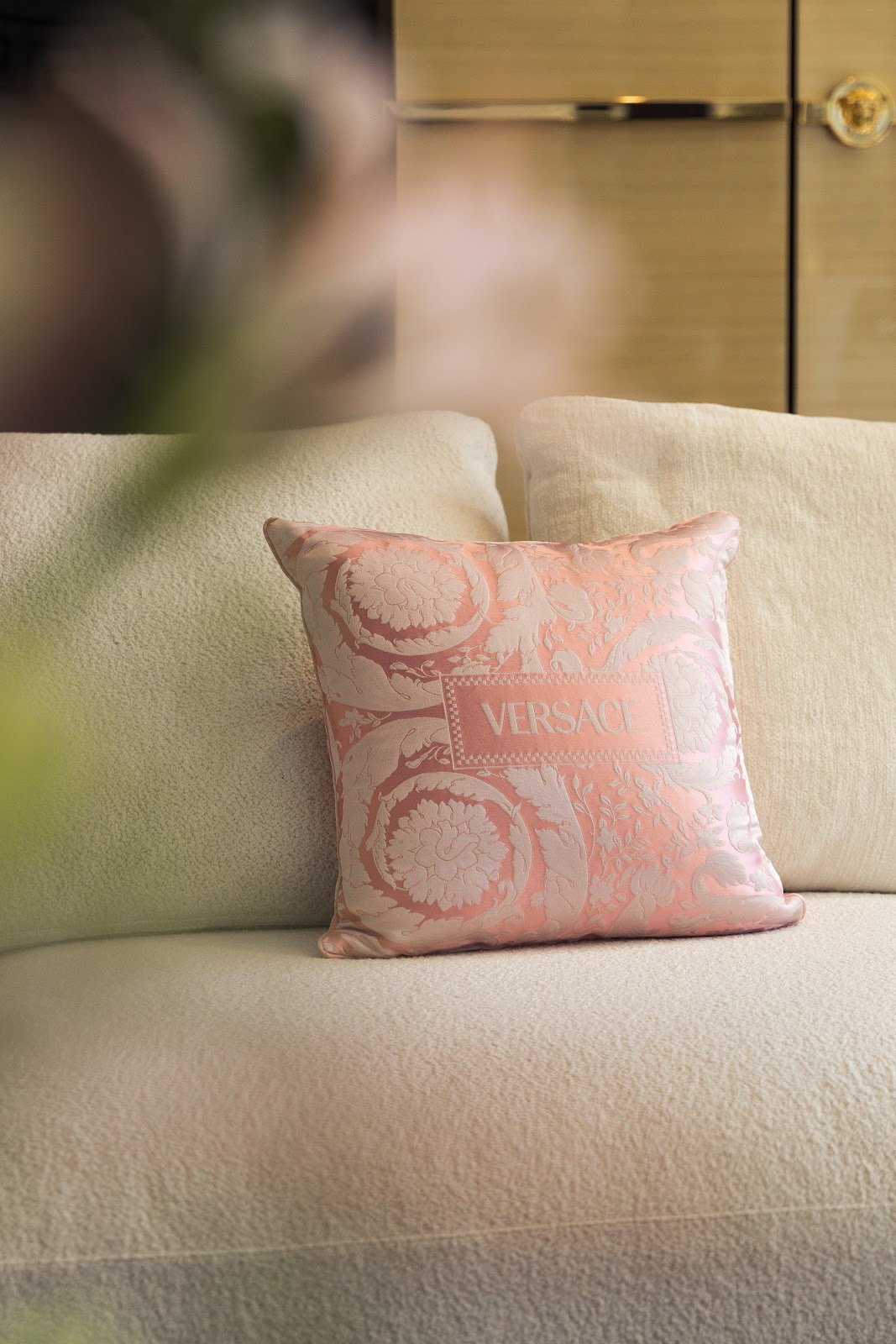
Bring a photograph of your floor and curtains, or a small offcut, to compare with the upholstery. Dubai daylight is strong. A sand-coloured fabric can look almost white beside the window at noon and warm beige under evening lamps. Ask which covers are removable, how they should be cleaned and whether a replacement cover can be ordered later. Solomia Home's advisers can answer these questions for the exact model.
Put the final layout on paper
Before paying, keep these together: a scaled plan with the sofa's footprint and every module, the direction of any chaise, the model name, upholstery code, leg finish and delivery notes. If the layout depends on a view or a route, check it once more with tape on site.
Compare modular sofas online, then bring your plan and a few photographs of the room to a showroom visit at Solomia Home in Dubai. Try two or three compositions side by side, ask for fabric samples to see in your own light, and leave with a drawing of the exact configuration.