A market analysis for the collector who reads balance sheets as fluently as blueprints.
For a certain class of buyer (the real estate investor with a Milan pied-à-terre, the family office allocating a "passion asset" sleeve, the collector who already treats art as a line item), furniture has quietly stopped being decoration. It has become a position. Not every sofa, obviously. But a defined, narrow set of pieces from a handful of manufacturers now behaves less like a depreciating consumer good and more like a small-cap equity with a strong moat: low float, high provenance requirements, and a buyer base that isn't going away.
This piece looks at three names that anchor that category: Cassina, B&B Italia, and Ceccotti Collezioni, and asks the question a wealth manager would actually ask: does this hold value, and under what conditions.
"We tell our clients the same thing we tell ourselves when we curate a collection: buy the piece you'd be proud to explain in ten years, not just the one that photographs well today. That's the difference between furnishing a home and building a position." — Dmytro Korotchuk, Founder, Solomia Home
The thesis: scarcity plus institutional memory
Fine art appreciates, in the simplest telling, because supply is fixed and demand is not. Collectible furniture works on a variant of the same mechanic, but with three extra variables layered in: authorship (who designed it), edition control(how many exist and whether the manufacturer still governs reissues), and condition provenance (originality of materials, documentation, and chain of ownership).
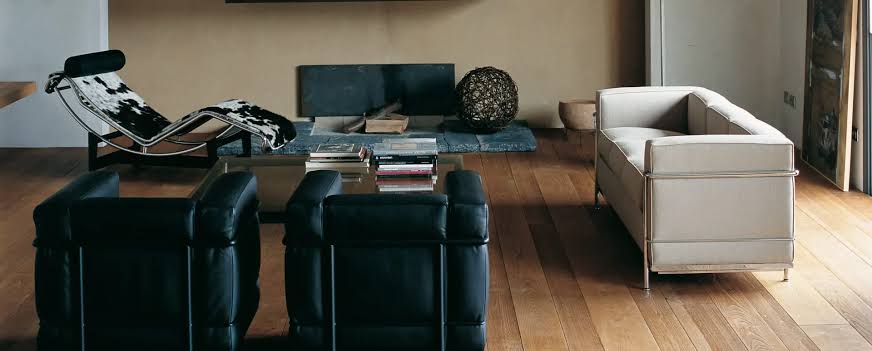
Auction data bears this out in a fairly blunt way. Analysts tracking the vintage design market note that an LC2 armchair by Cassina has sold for roughly 30% more than an unsigned model of comparable quality, with institutional recognition anchoring that premium. That's not a taste premium, it's a documentation premium. The market is pricing the guarantee, not just the object.
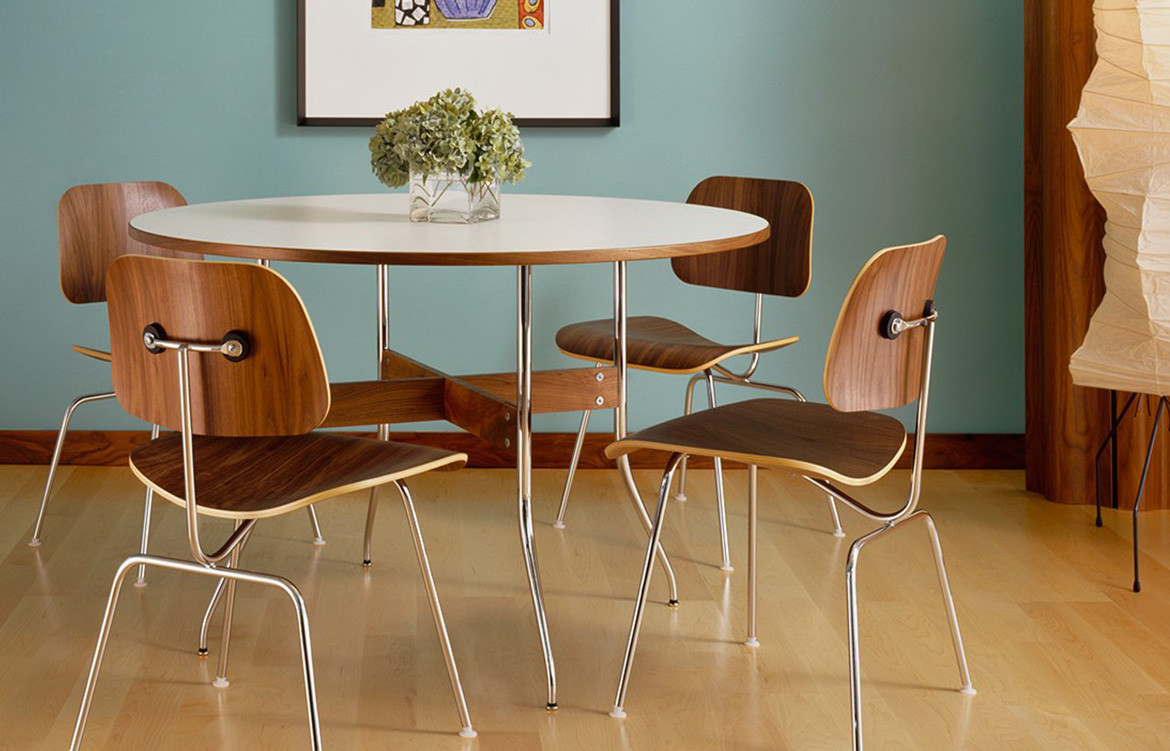
Rarity compounds it further. Limited runs of the Eames DCM chair are reported to have doubled in value over a ten-year period, which is a return profile that would get attention in any asset class, let alone one you can also sit in.
Cassina: the reference index of the category
Cassina is effectively the benchmark instrument here, the design-world equivalent of a blue-chip index constituent. Its relationship with the Le Corbusier, Pierre Jeanneret, and Charlotte Perriand estates gives it something almost no competitor has: exclusive, licensed production of the LC series, meaning every LC2, LC3, and LC4 in circulation is either an original Cassina edition or explicitly not one. That binary is what auction houses and appraisers can underwrite.
 The secondary market reflects a wide but structured price ladder. Dealer inventories on the specialist resale circuit price Cassina pieces from roughly $383 up to $59,000+, with an average closer to $7,900, a spread that tracks designer pedigree and edition rather than mere age. At auction, the signal is sharper still: a pair of 1950s Gio Ponti armchairs with a walnut structure sold for €71,500 against a €30,000 to €40,000 estimate in 2021, nearly double the high end of the range, and a data point that reads more like an equity beating consensus guidance than a furniture sale.
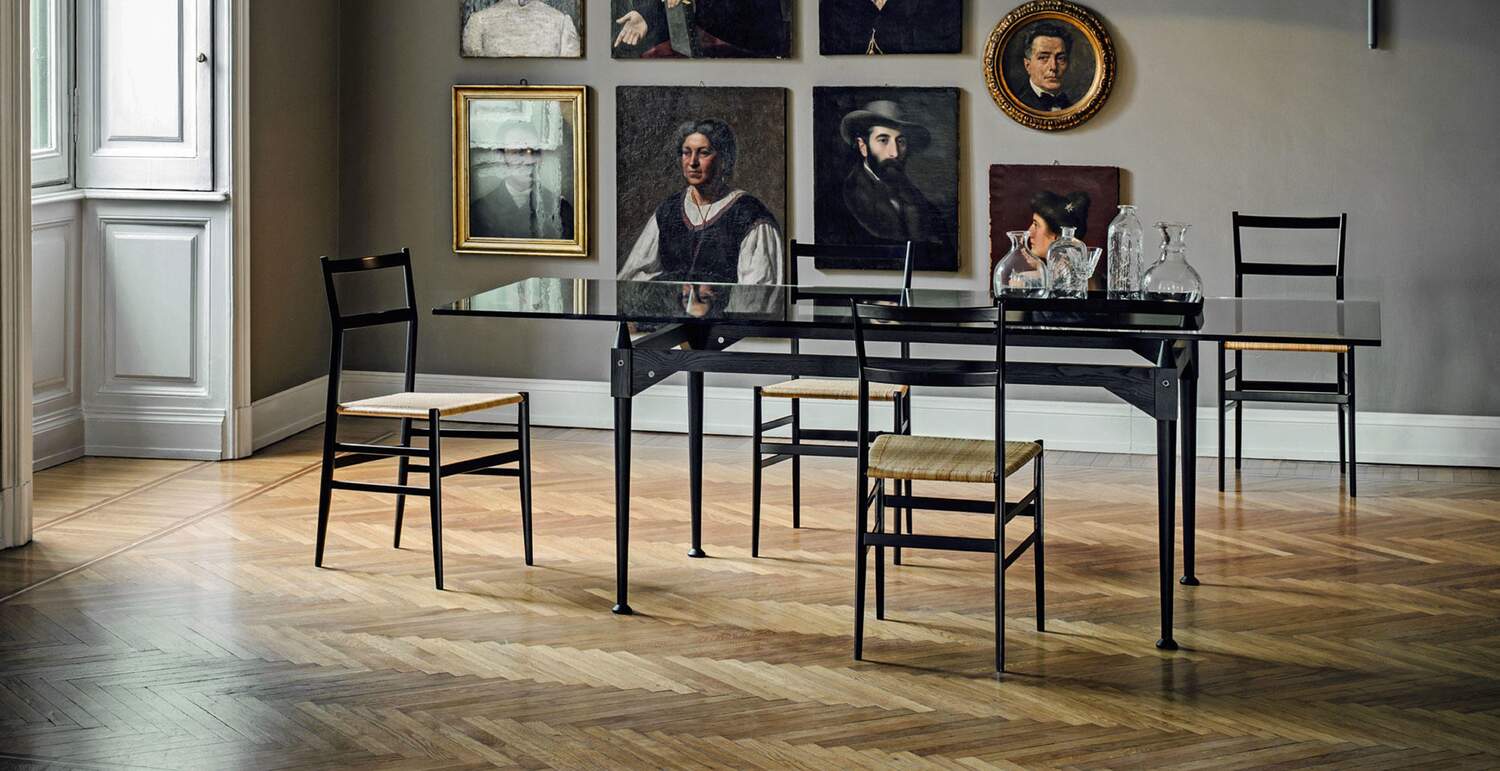
Investment read: Cassina's licensed-classics division (LC series, Rietveld reissues, Frank Lloyd Wright pieces) behaves like a defensive holding, with deep provenance, wide buyer recognition, and steady demand. Its contemporary-designer lines (Urquiola, Lissoni) are closer to growth-stage bets, contingent on the designer's reputation continuing to build.
B&B Italia: the volatility play with a strong floor
B&B Italia's investment case is less about a single licensed archive and more about a handful of genuinely iconic silhouettes, chief among them Mario Bellini's Camaleonda modular sofa (1970) and Paolo Piva's Alanda and Adiasystems. These pieces did something rare for furniture: they became visual shorthand, referenced in film (the Maxalto collection under the same group appeared in a Bond production) and in decades of interior-design editorial, which sustains demand independent of any single collector cycle.
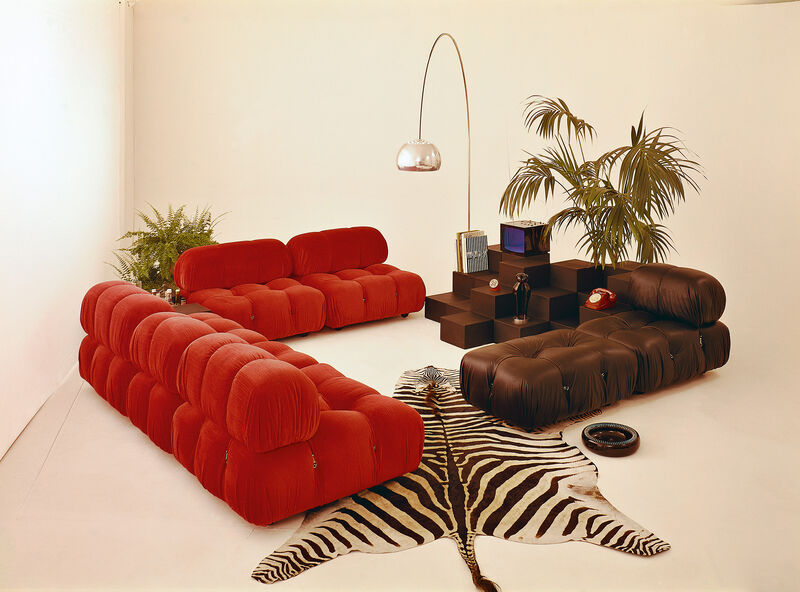
Resale pricing on the specialist secondary market currently spans roughly $550 to $52,000, averaging around $6,500 to $7,900 depending on category, with early Bellini and Scarpa pieces from the 1970s commanding the top of that range against later production. Auction turnover has also picked up materially: the house's designers now appear regularly in dedicated 20th-century design sales rather than general furniture lots, which is itself a signal of the category being reclassified upward by the market.
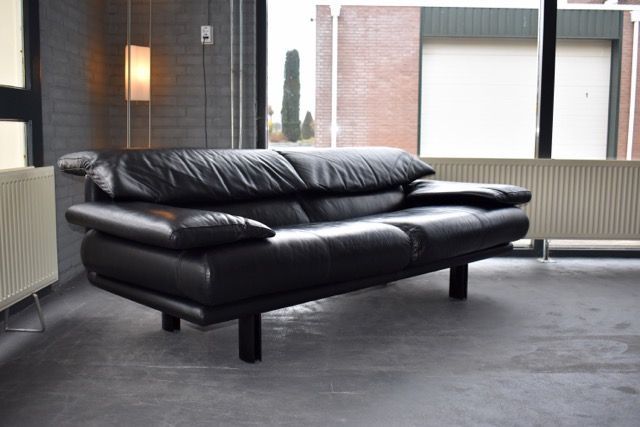
Investment read: B&B Italia is the higher-beta name in this trio. Its value is concentrated in a small number of hero pieces from the Bellini/Scarpa/Piva era; buying outside that core (later production, non-collaborator designers) does not carry the same resale discipline.
Ceccotti Collezioni: the illiquid, high-conviction position
Ceccotti is the odd one out in this comparison, and that's precisely its appeal to a certain investor profile. Where Cassina and B&B Italia are industrially produced at meaningful scale, Ceccotti, based in the Tuscan town of Cascina, remains close to a workshop model, built on meticulous manual craftsmanship requiring hundreds of hours per piece in materials like American walnut. Its long collaboration with architect-designer Roberto Lazzeroni, going back to the brand's 1980s reinvention, has produced a body of sculptural case goods and seating with genuinely low production numbers.
This is a market with far thinner data than Cassina or B&B Italia. Few pieces trade on the open secondary market, and pricing is closer to private-treaty than transparent auction discovery. That illiquidity is a real cost for a buyer who might need to exit. But it is also, structurally, the same reason low-float small-cap stocks or single-owner collections command premiums when they do surface: scarcity of supply, not just of demand.
Investment read: Ceccotti suits a buy-and-hold horizon, not a trading position. Expect wider bid-ask spreads and longer holding periods to realize value, offset by genuine rarity that the two larger houses can't replicate at their production volumes.
What the market-wide numbers say
Zooming out from individual brands, the broader collectible-design category has been re-rating for several years, and 2025 looks like an inflection point rather than a one-off. Design-specific auctions at the three major houses in New York posted combined sales of roughly $65 million in June 2025 alone, a 64% jump over the prior year, while Christie's Paris design sale the same season brought in €14.5 million against presale estimates, with 89% of lots selling. Broader tallies from Sotheby's, Christie's, and Phillips design categories showed a 62.3% year-on-year increase in the same period, and the U.S. auction market overall, spanning design's neighboring art categories, grew 23% in 2025 to $3.17 billion, its first annual increase in three years.
There is also a demographic tailwind worth flagging to any wealth manager modeling a multi-decade hold: Phillips reported that millennial and Gen Z collectors made up roughly 20% of bidders at its design sales in 2025, a buyer cohort that did not exist in this category a decade ago and that structurally supports demand as older collections come to market.
Where the risk actually sits
None of this should be read as "furniture always appreciates." The category has three structural risks a serious allocator should price in:
- Authentication cost. Unlike a stock certificate, a chair's authenticity requires expert appraisal, and the cost of getting it wrong (a well-made unlicensed reproduction) can be total, not marginal.
- Illiquidity and thin comparables. Outside the top-tier lots at Wright, Phillips, Christie's, and Sotheby's, most transactions happen through dealers and private sales with limited price transparency, closer to real estate than to listed equities.
- Condition drag. Original upholstery, patina, and unrestored surfaces carry real premiums in this market; a "refreshed" piece can lose much of the value a similar, untouched example would command.
The pragmatic takeaway
Treated correctly, a small allocation to auction-grade design furniture behaves like a genuine diversifier: low correlation to equity and bond cycles, a growing and increasingly global buyer base, and, for Cassina's licensed classics in particular, a documentation structure that functions almost like a title deed. Cassina offers the closest thing to an index-fund entry point into the category; B&B Italia offers concentrated exposure to a handful of design icons with real upside and real volatility; Ceccotti offers illiquid, high-conviction scarcity for buyers who don't need to exit on a schedule.
As with any alternative asset, the return isn't in the object. It's in the discipline of buying only what a specialist can authenticate, and holding it long enough for the market's growing appetite for design to do the rest.