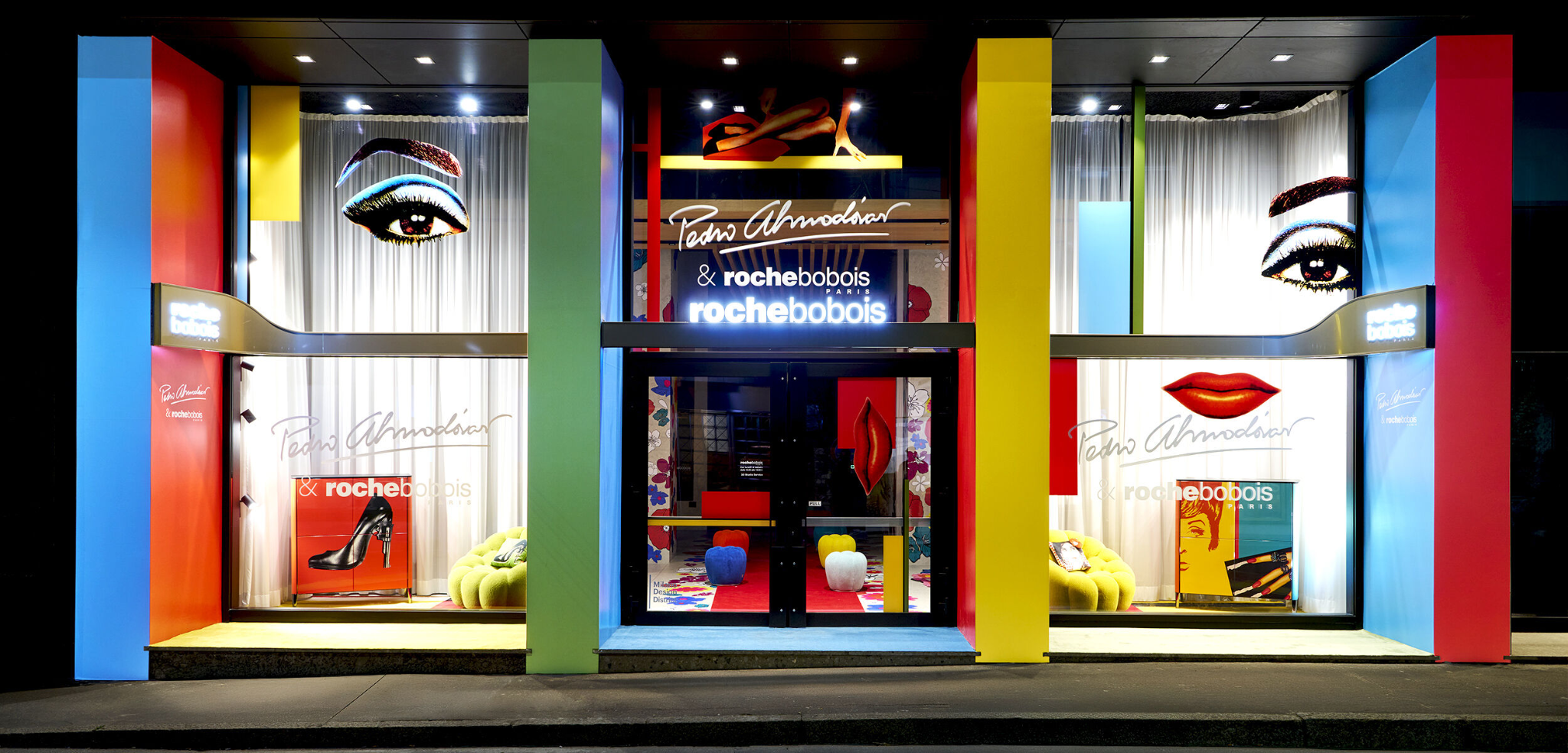
Since 1960, Roche Bobois has operated at the precise intersection where modular avant-garde furniture stops being a product and starts being a cultural argument. Few luxury design houses have built a comparable institutional framework around the idea that seating is narrative, a position confirmed by five decades of collaborations with Missoni, Jean Paul Gaultier, and Kenzo Takada, and now crystallized in its most cinematically ambitious partnership to date. The Cromática collection, launched at the Milan Design Week in April 2025, pairs Roche Bobois’s Since 1960, Roche Bobois has operated at the precise intersection where modular avant-garde furniture stops being a product and starts being a cultural argument. Few luxury design houses have built a comparable institutional framework around the idea that seating is narrative, a position confirmed by five decades of collaborations with Missoni, Jean Paul Gaultier, and Kenzo Takada, and now crystallized in its most cinematically ambitious partnership to date. The Cromática collection, launched at the Milan Design Week in April 2025, pairs Roche Bobois’s design language with the visual vocabulary of Spanish filmmaker Pedro Almodóvar: fiery crimsons, saturated fuchsias, bone whites, and the particular shade of red that has functioned as his authorial signature since Women on the Verge of a Nervous Breakdown. The result is an object category that design-driven investment logic has long anticipated, furniture that functions simultaneously as collectible graphic art, a numbered limited edition, and functional interior architecture.

The Cromática Collection: Where a Golden Lion Becomes a Floor Plan
That creative alignment produced something rarer than a licensing deal: a shared conviction about what color does to a room and what a room does to an emotion.
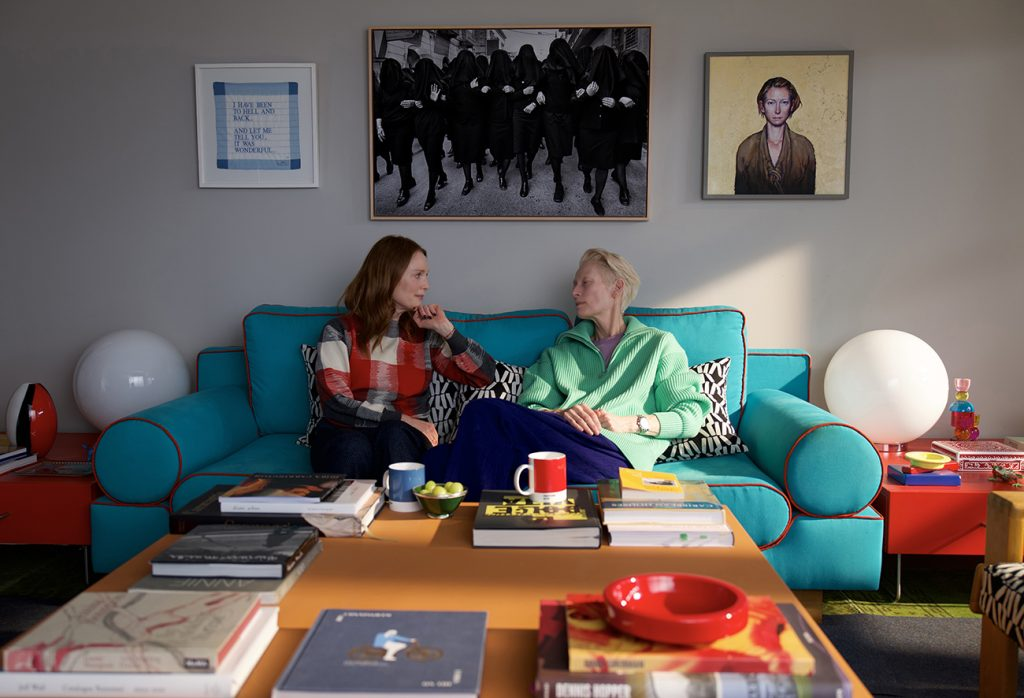
Almodóvar's production company is named El Deseo. That name now belongs to the most significant piece in the collection.
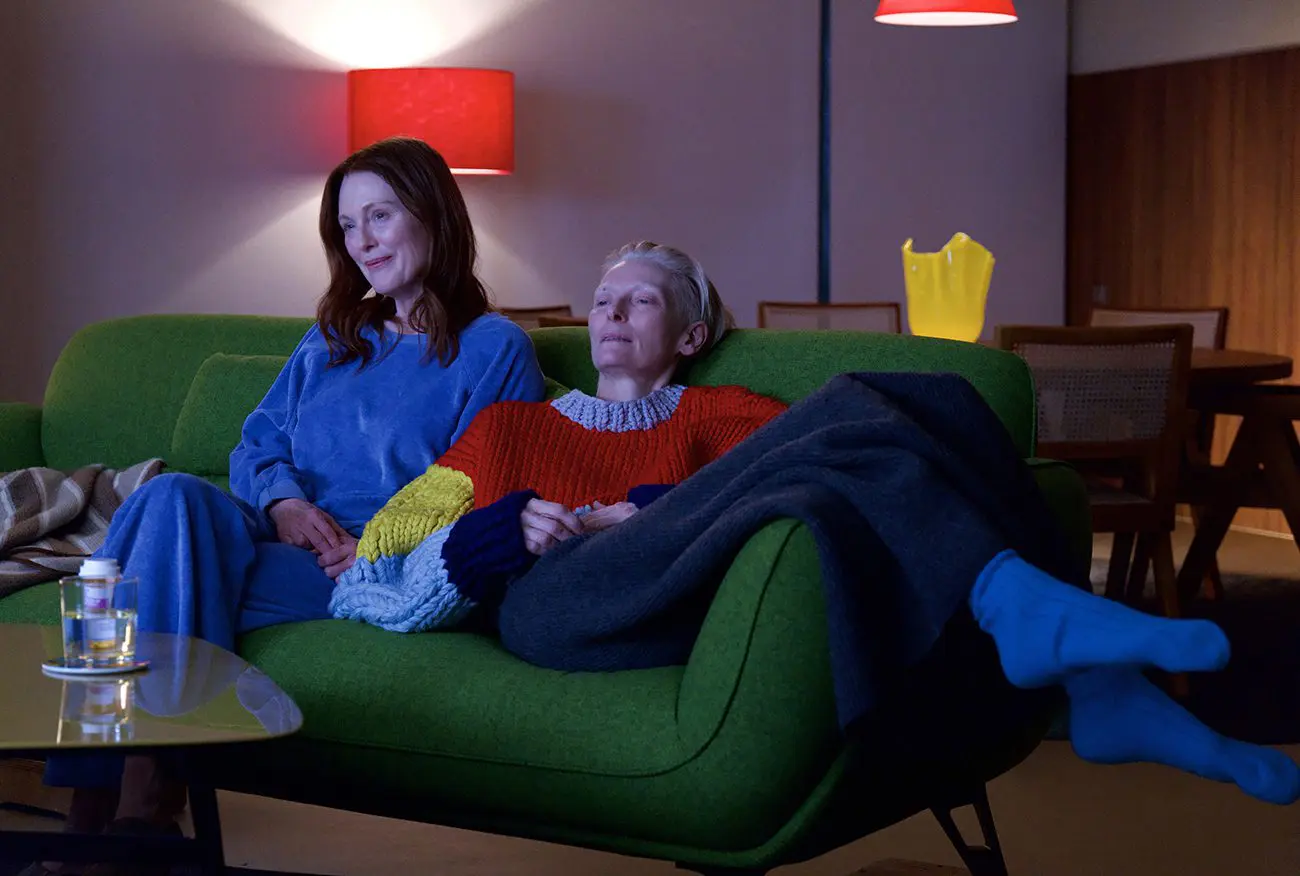
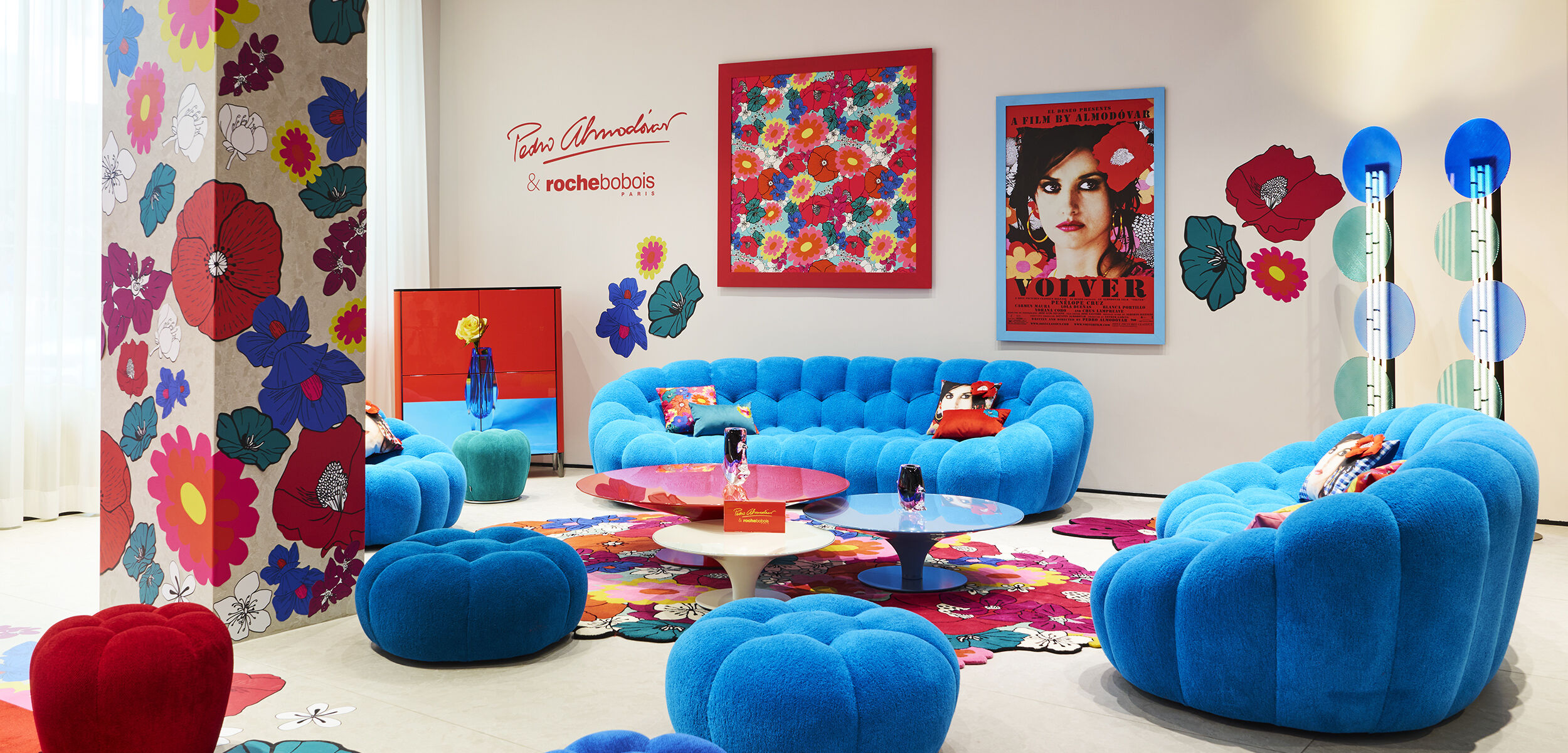
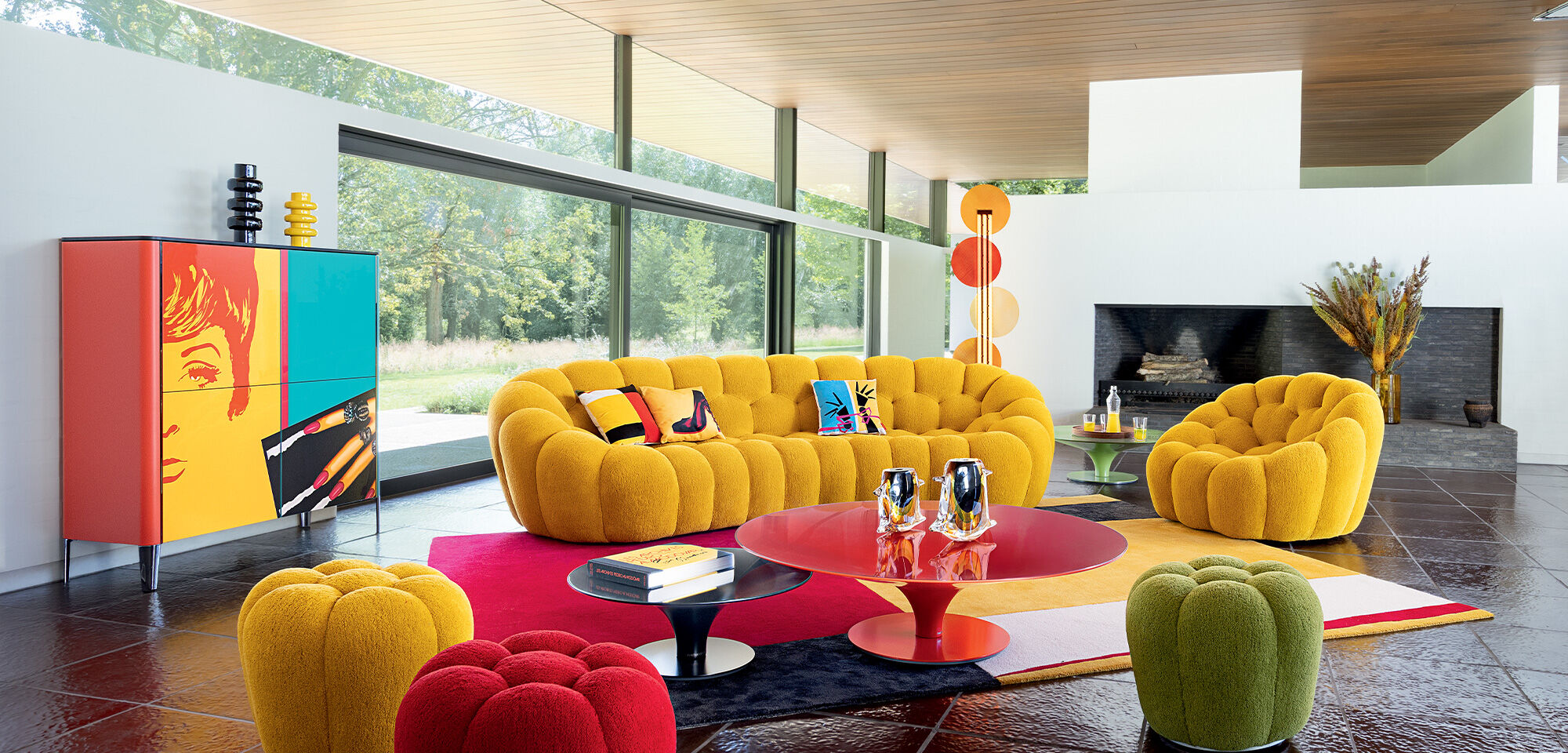
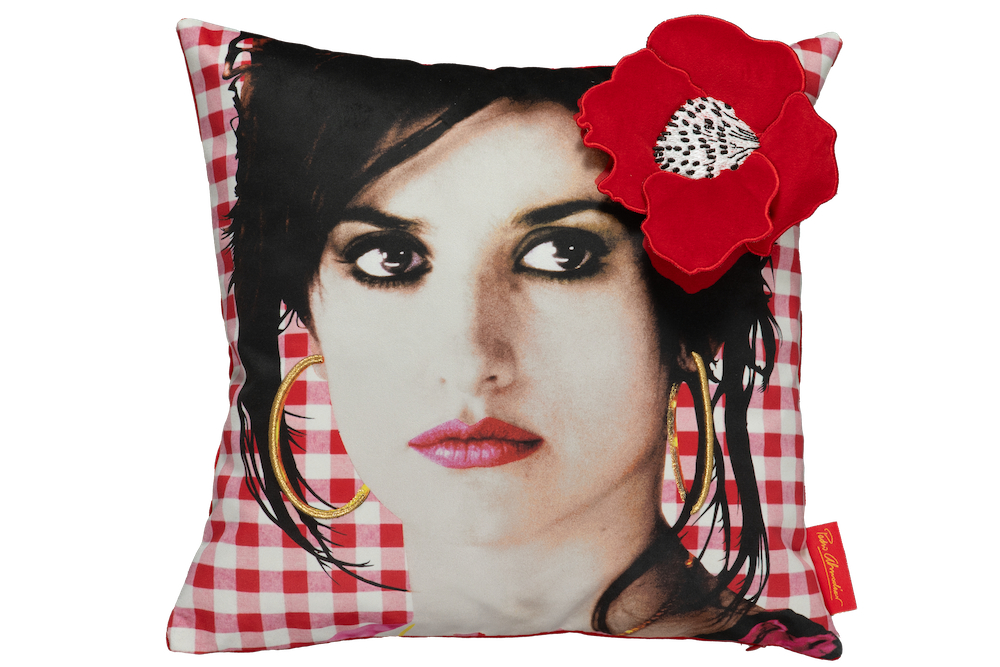
The Cromática line extends across multiple object categories. The Bubble sofa, designed by Sacha Lakic and celebrating its 10th anniversary, is reissued in four exclusive colorways selected by the director. The Rondo 2 china unit carries four printed door panels referencing film posters: Tacones Lejanos, Mujeres al Borde de un Ataque de Nervios, Atame, and a still-life photograph by Almodóvar himself. Three rugs complete the collection: hand-tufted in pure New Zealand wool, each derived from a film's opening credit sequence - including the Volver piece with its floral border cut to follow a botanical motif, and the El Deseo rug, designed personally by the director, whose graphic geometry replicates the frame of a camera viewfinder.
The El Deseo Lounge: Technical and Aesthetic Architecture of a 50-Unit Edition
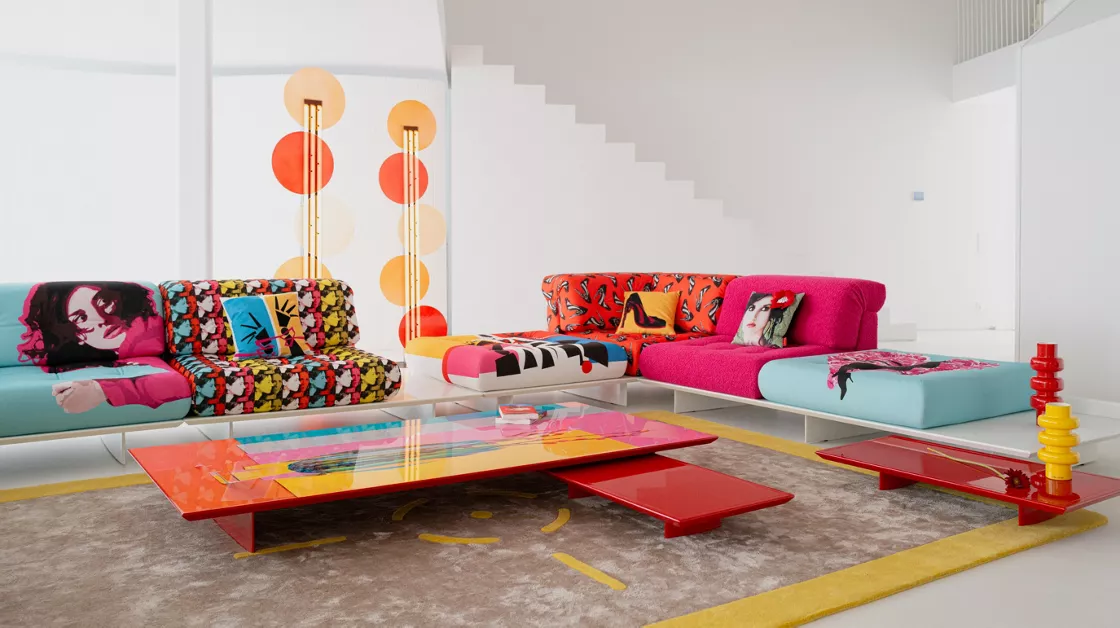
The centerpiece of Cromática is the Lounge El Deseo - a direct reissue of Hans Hopfer's 1971 modular sofa architecture, upholstered in fabrics that Almodóvar designed himself from imagery drawn across his 45-year filmography. This is not a licensed print applied to an existing textile substrate. These are fabrics Almodóvar personally selected and adapted, reorganizing frames from posters for Volver, Hable con ella, Mujeres al Borde de un Ataque de Nervios, and Atame into upholstery-scaled compositions that read coherently at seating distance without dissolving into decorative noise at close inspection.
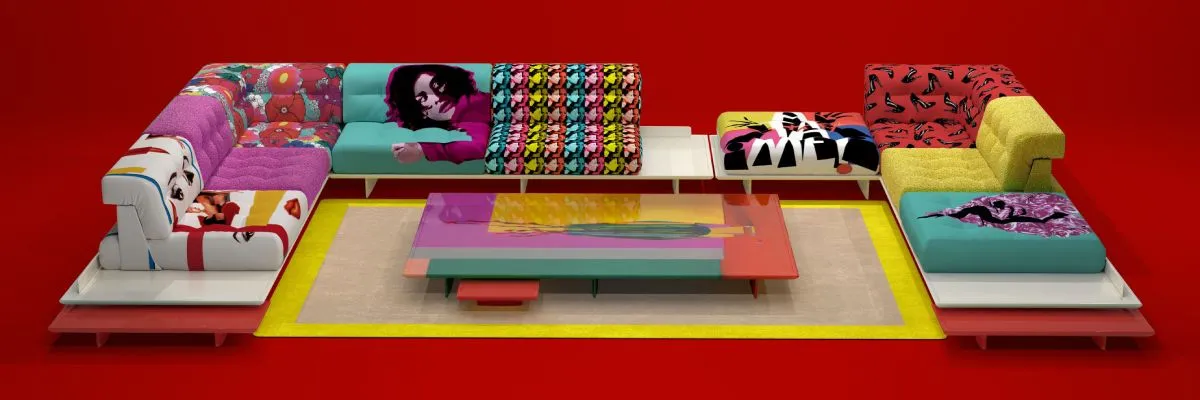
The modular structure follows the canonical Mah Jong system: each seat cushion measures 95 x 95 x 19 cm, and the system allows nine-module configurations as shown in the El Deseo corner composition. Straight backs reach H. 53 cm; lounge chair seat units extend to 159 x 95 x 19 cm. All elements are padded and button-tufted entirely by hand in a workshop in Italy - a production standard that Roche Bobois has maintained without interruption since the design's first edition. The platforms for the El Deseo version are finished in white lacquer, providing a deliberate chromatic contrast to the saturated poster-derived upholstery above them. Lacquered stirrups are available in several colorways or tone-on-tone configurations, following the original 1971 engineering logic.
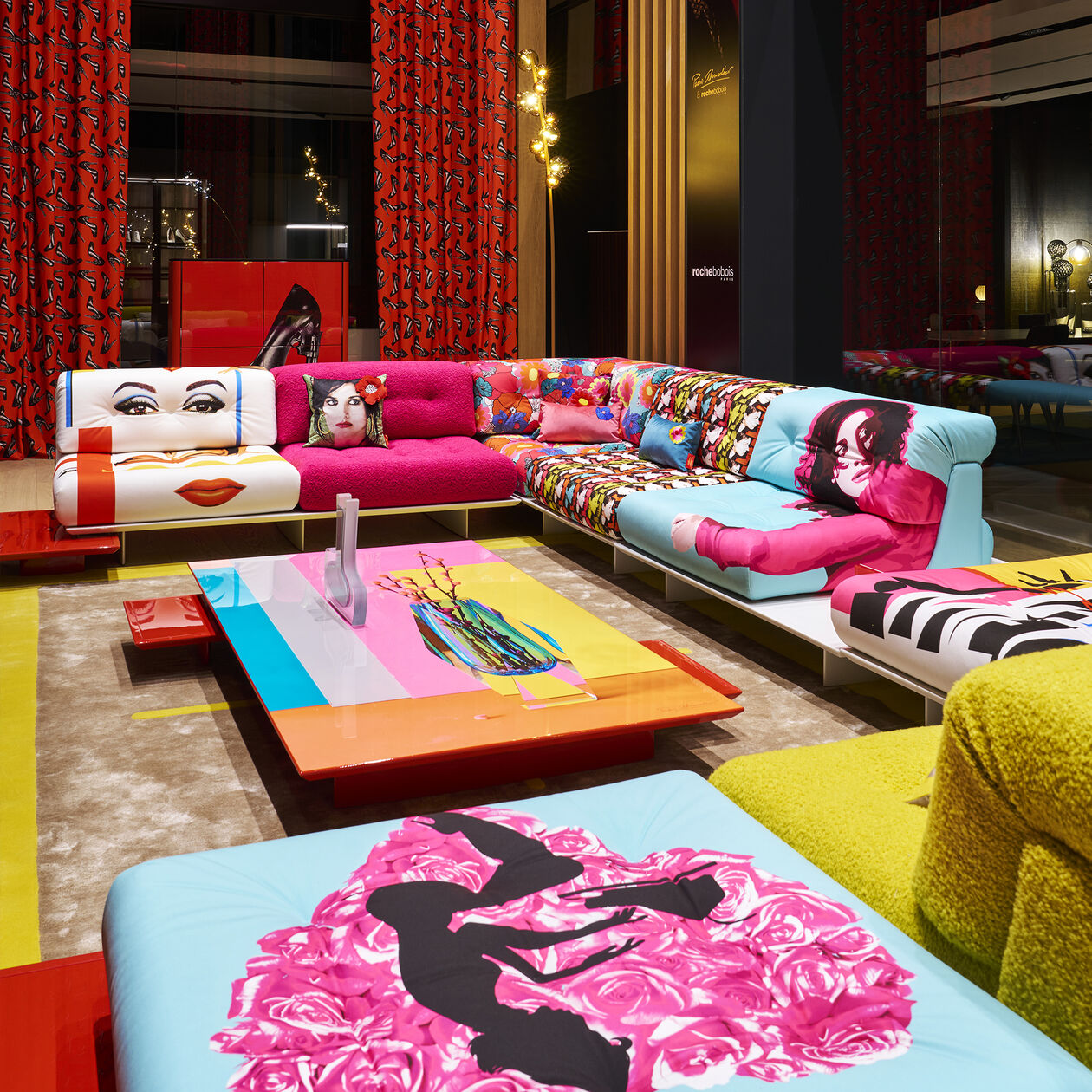
The hand-stitched construction methodology used across the El Deseo edition places every cushion in a production class reserved for couture-grade upholstery: individually sewn, individually padded, individually inspected before composition. Luxury upholstery textiles at this specification level are rated to a minimum of 25,000 Martindale rub cycles under ISO 12947-2 standards - the threshold for heavy domestic use - with Roche Bobois's designer collaboration fabrics historically exceeding this baseline given their premium weave substrates. The digital printing process used for the film poster imagery requires a high-thread-count base textile to prevent color bleeding at cushion folds, which, in practice, functions as a structural quality filter; lower-specification fabrics cannot sustain the resolution fidelity that Almodóvar's imagery demands.
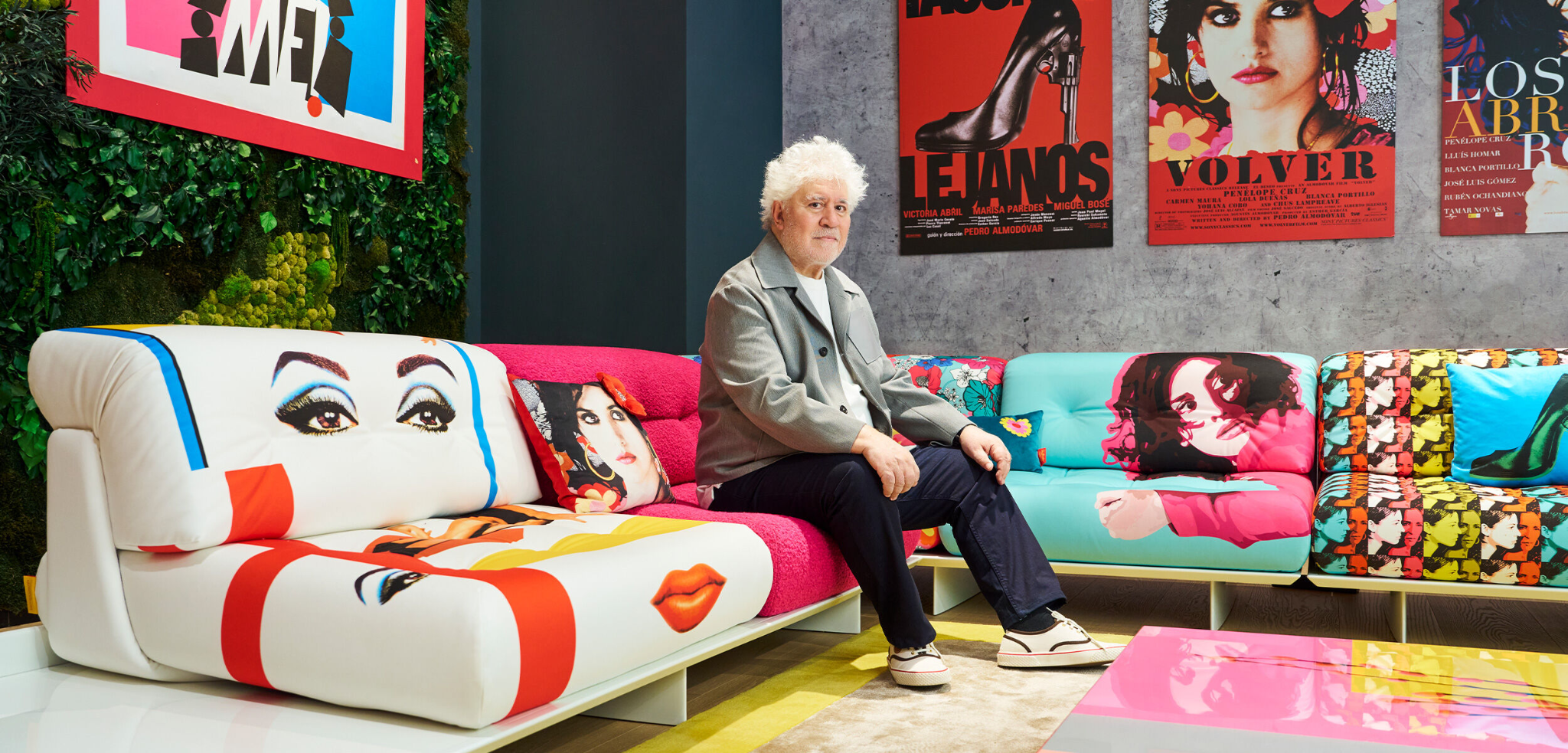
The edition is strictly capped at 50 numbered units, each signed by Pedro Almodóvar. This is not a soft production ceiling - it is the edition size, a figure that places the Lounge El Deseo in the same scarcity tier as fine art multiples rather than luxury furniture runs. For context: a nine-element composition in the Cromática configuration carries a retail price of $60,000–$80,000, depending on configuration and market, while individual Lounge seat cushions in the standard Mah Jong system start at approximately $1,475 and increase significantly with designer fabrics.
The Investment Logic of Hand-Stitched Artistry in Motion
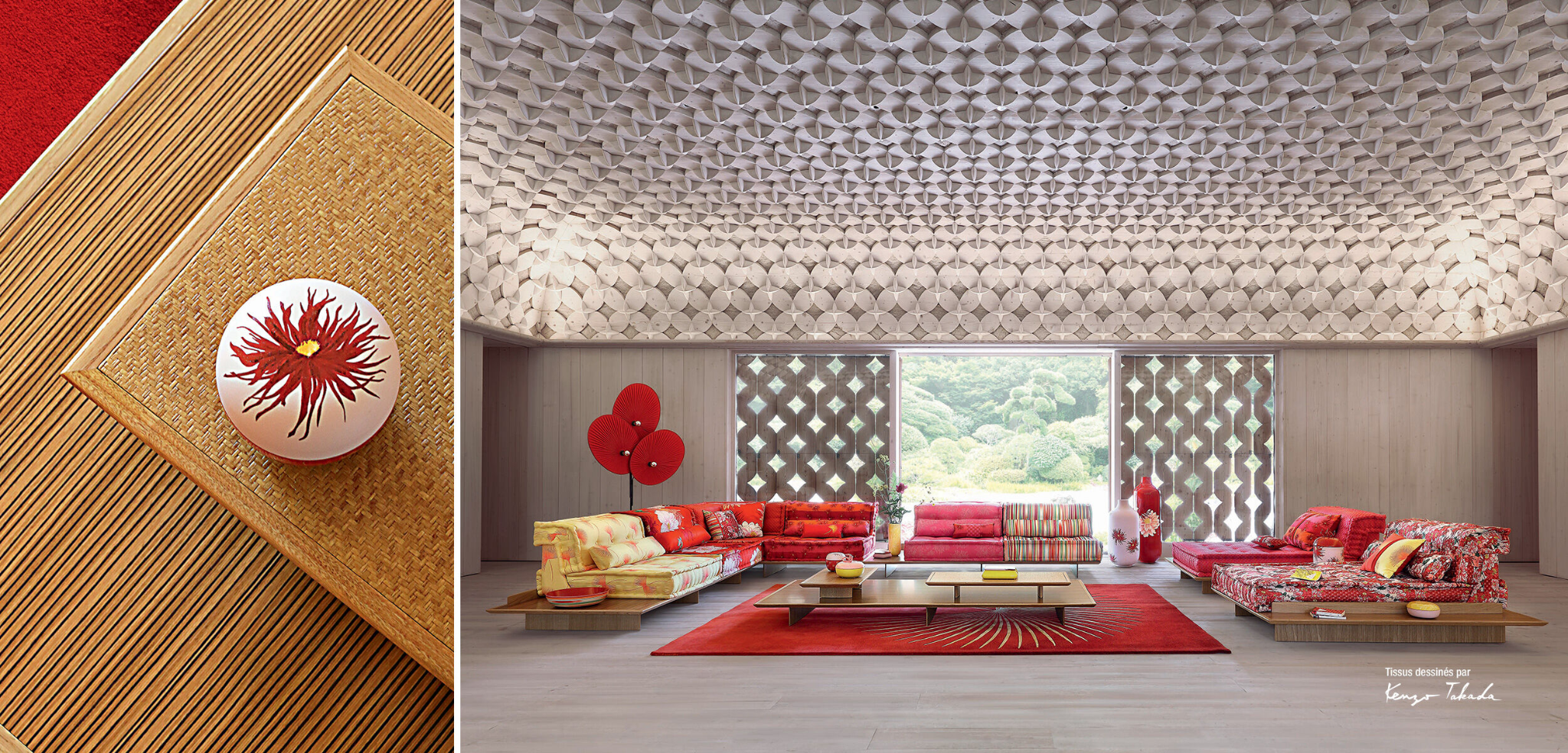
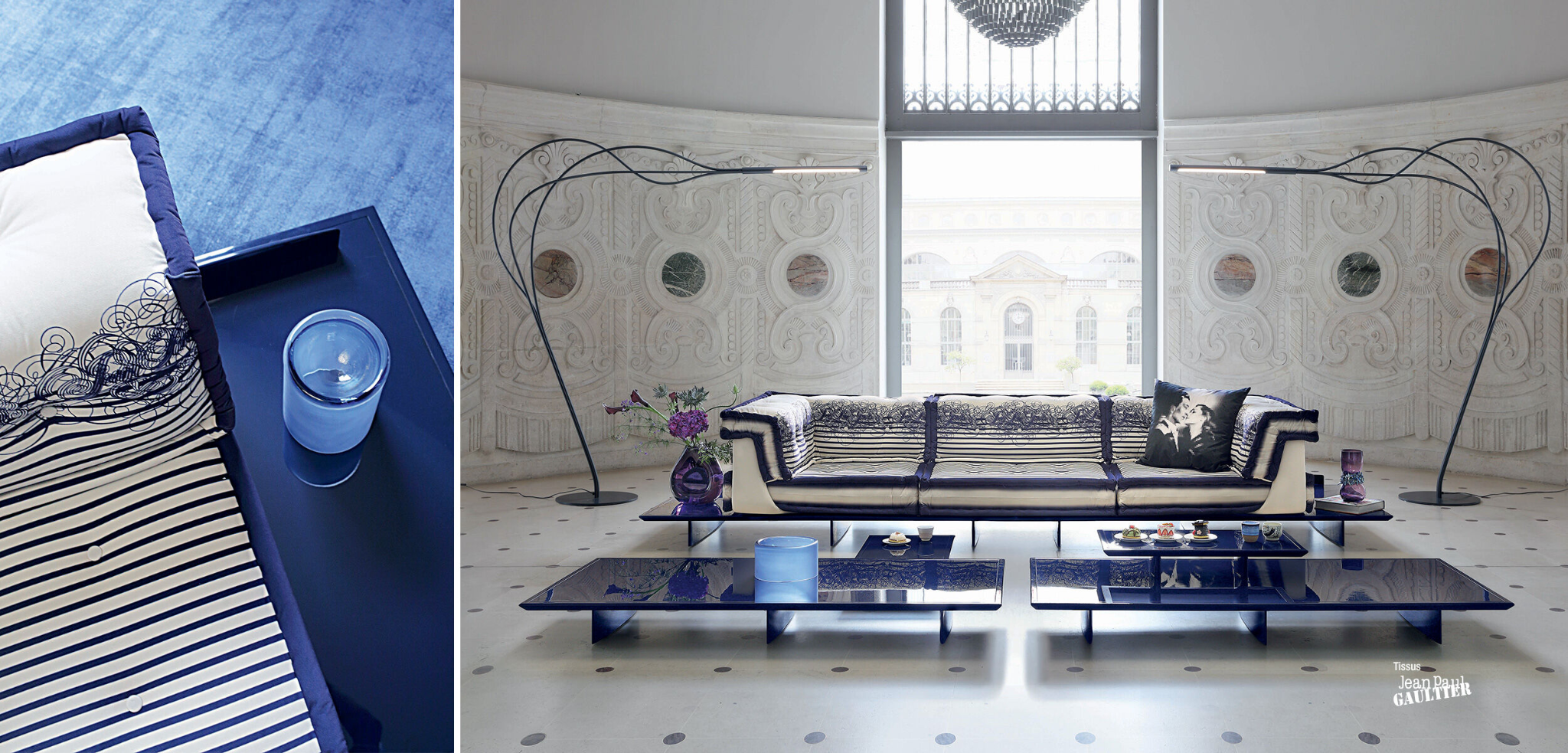
The secondary market for Roche Bobois designer collaborations has generated consistent documentation across resale platforms, including 1stDibs and Pamono, where Missoni-edition and Jean Paul Gaultier-edition Mah Jong compositions command premiums well above their original retail prices - particularly for configurations in mint or unused condition from private residences. The 2010 Jean Paul Gaultier collaboration, launched to mark Roche Bobois's 50th anniversary, produced couture-fabric compositions whose resale listings in 2024 and 2025 reflect values that have not merely held but tracked appreciably upward as those editions became discontinued. Kenzo Takada editions have followed the same trajectory.
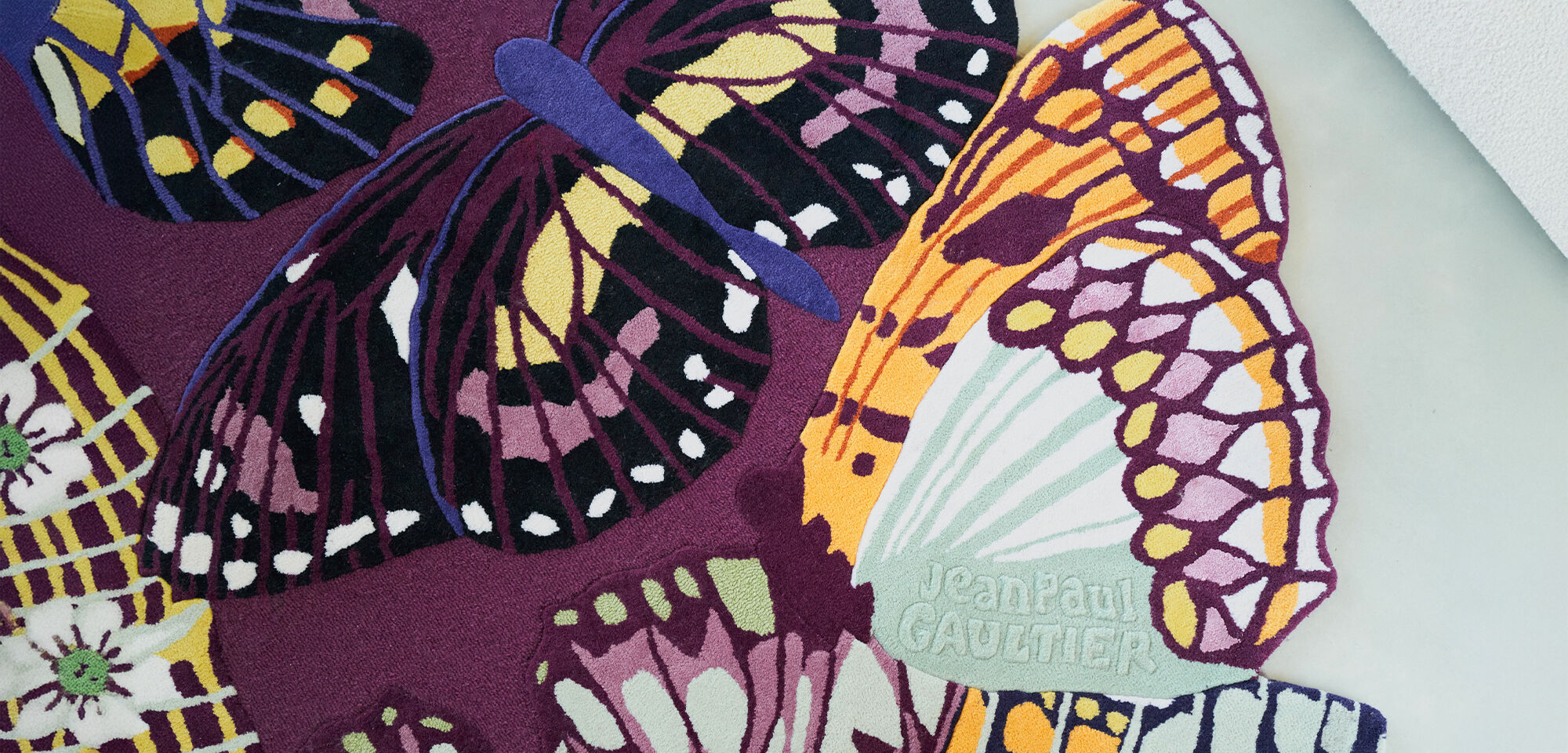
The mechanism driving this appreciation is not sentimental. It is structural: each Mah Jong designer collaboration is tied to a specific, non-reproducible cultural moment. After Jean Paul Gaultier stepped away from fashion in 2015 and following the passing of Kenzo Takada in 2020, their respective Mah Jong editions became artifacts of a closed authorship, objects whose scarcity is now permanent rather than merely limited. The El Deseo edition introduces an additional layer that neither precedent possessed: the 50 units are issued as a numbered edition associated with a living filmmaker and Golden Lion laureate whose cultural standing in both cinema and visual art continues to evolve. The piece functions simultaneously as a design collectible, a signed limited edition, and a proxy investment in Almodóvar's cultural legacy.
|
Collaboration |
Edition Type |
Production Status |
Key Fabric Characteristic |
Resale Market Signal |
|
Missoni |
Ongoing licensed collection |
Active |
Knitted zig-zag and geometric wool blends |
Strong secondary demand; vintage editions trade at a premium |
|
Jean Paul Gaultier |
Couture collection - multiple waves |
Discontinued (designer retired 2015) |
Sailor stripes, tattoo prints, silk velvet |
High resale premiums; sets from 2010–2012 are most sought after |
|
Kenzo Takada |
Seasonal collection |
Discontinued (designer died in 2020) |
Botanical and geometric pattern printed fabrics |
Closed authorship drives scarcity premium |
|
Pedro Almodóvar - El Deseo |
Signed limited edition - 50 units |
Active (September 2025 retail availability) |
Director-designed film poster imagery, hand-tufted |
Pre-appreciating: signed + numbered + living author at peak standing |
Why Art-Meets-Design Objects Outperform Standard Luxury Furniture on the Resale Market
Luxury furniture typically loses value according to a standard pattern where the price drops significantly during the first years of use. However, collectible design objects change the rules of the game. These items are valued not as used household goods but as authored works with an official history.
The Mah Jong system by Roche Bobois was created by Hans Hopfer and today occupies a special place at the intersection of furniture and art. The significance of this design is confirmed by the fact that similar works are held in the Museum of Modern Art in New York and the Victoria and Albert Museum in London. This moves the sofa from the category of simply comfortable furniture into the category of collectible objects.
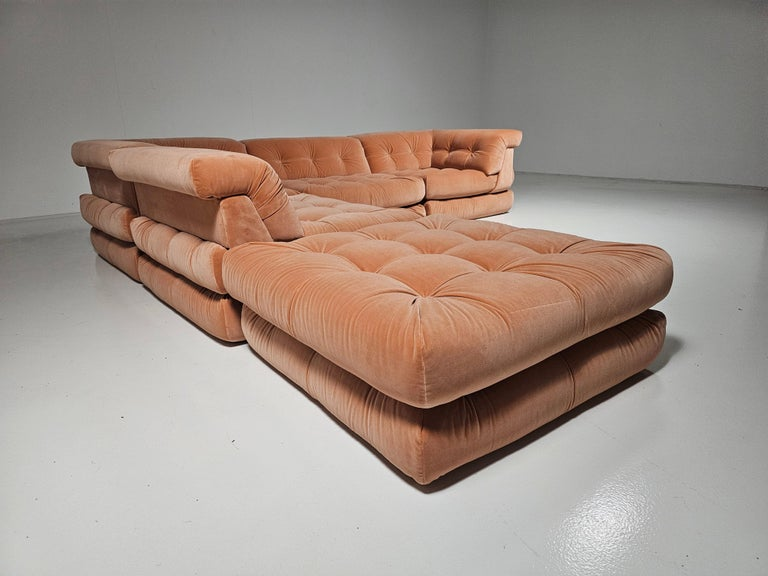
The special El Deseo series was created together with Pedro Almodóvar. It adds value through unique visual imagery from his films. Such a collaboration makes the object important for collectors because the rarity of the edition and the artistic contribution of the author affect the market price much more than regular physical wear and tear.
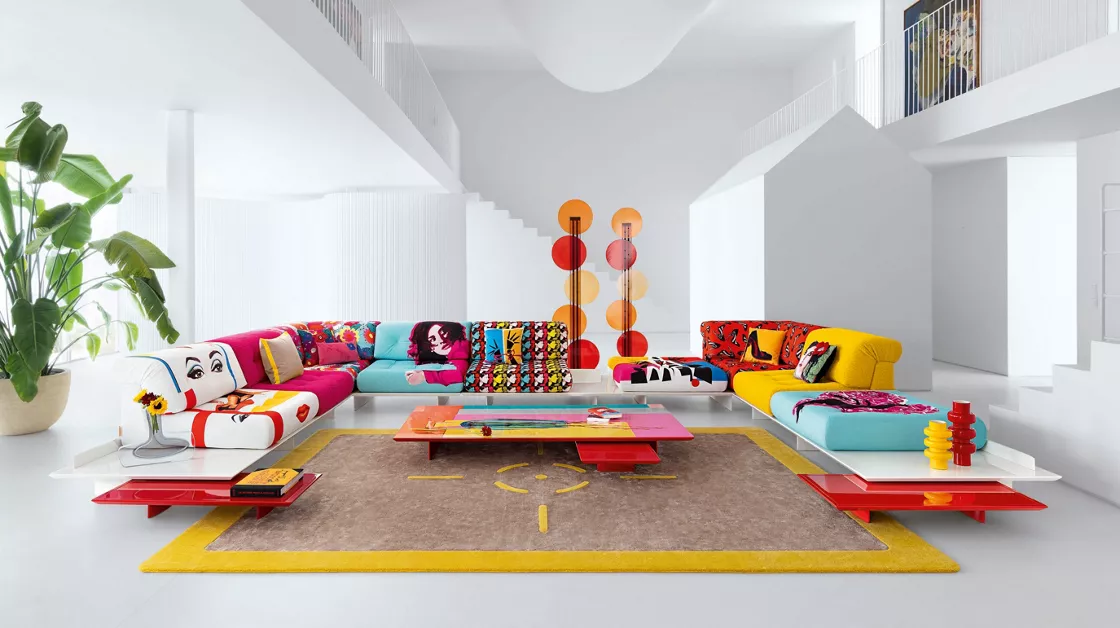
In major markets like Dubai where global trends from Milan Design Week are highly prized, such items become a special type of asset. They combine practicality with the value of art, which allows their price to remain stable over a long period of time.
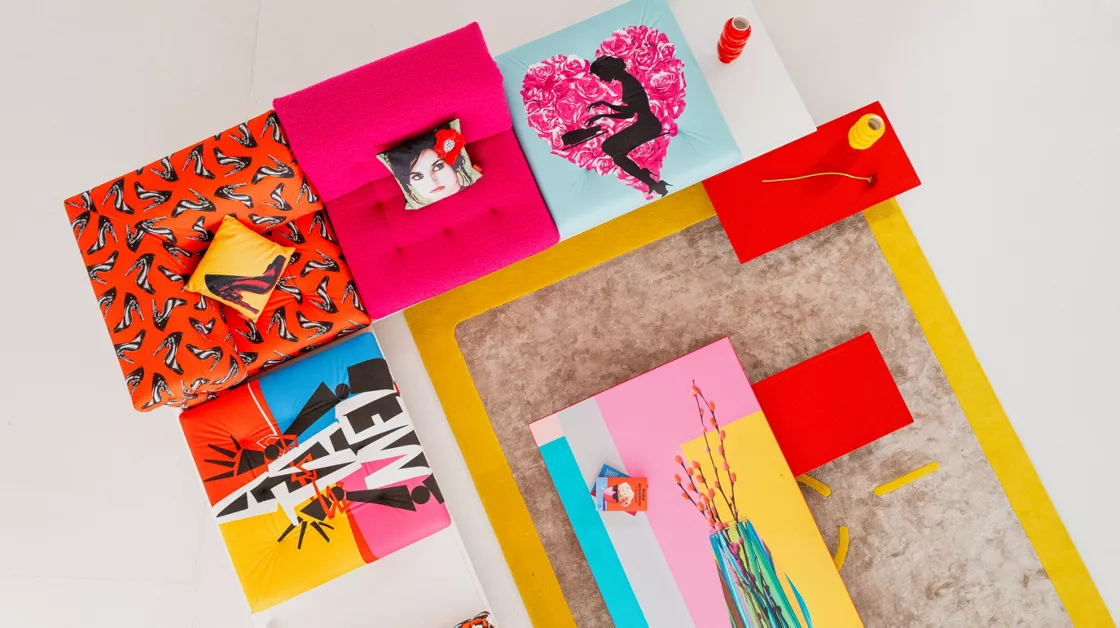
The Cromática Palette: Color as Structural Argument
Pedro Almodóvar’s filmographic color language is not decorative. In Volver, the kitchen reds function as emotional temperature indicators for scenes of grief and transformation. In Mujeres al Borde de un Ataque de Nervios, high-saturation pinks and acid yellows create a visual register of controlled hysteria that the narrative mirrors in its structure. When these chromatic relationships enter a domestic interior, they carry that same associative weight, not as decoration but as argument, positioning the interior as an expression of those who live within it.
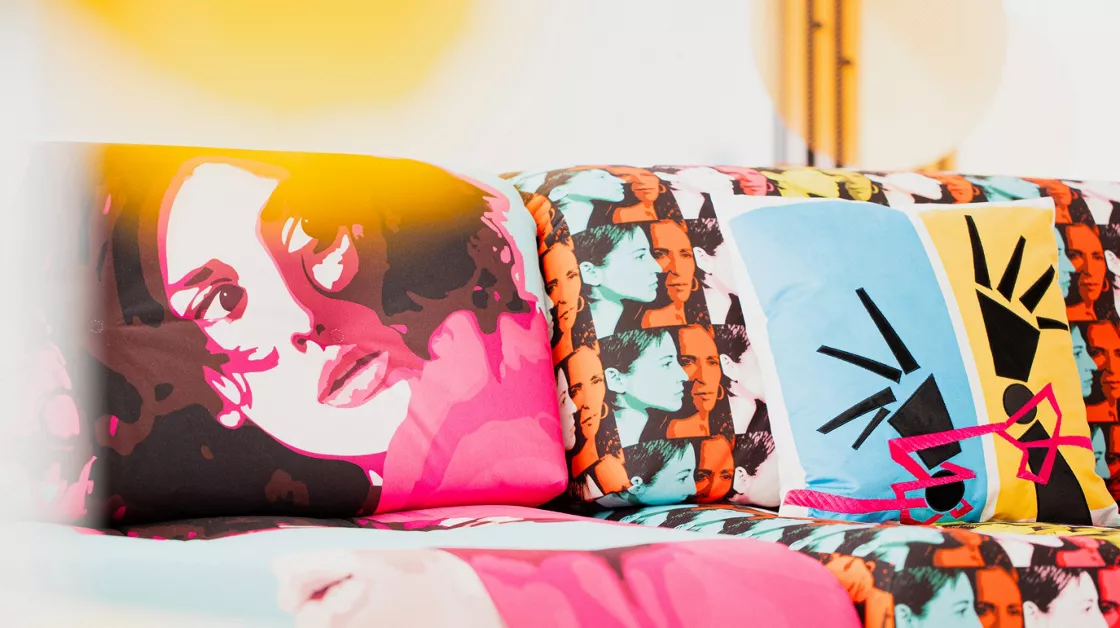
The El Deseo palette spans the full intensity range Almodóvar's career has explored: the deep vermillion of Hable con ella, the bone-and-black severity of La mala educación, the blown-out florals of Volver, and the clinical whites of The Room Next Door. These are not a curated mood board. They are a filmographic archive reorganized as upholstery, which means that the nine-element El Deseo composition in a living room is not referencing cinema. It is functioning as a cinema: a sequence of color decisions that builds emotional information across the field of view.
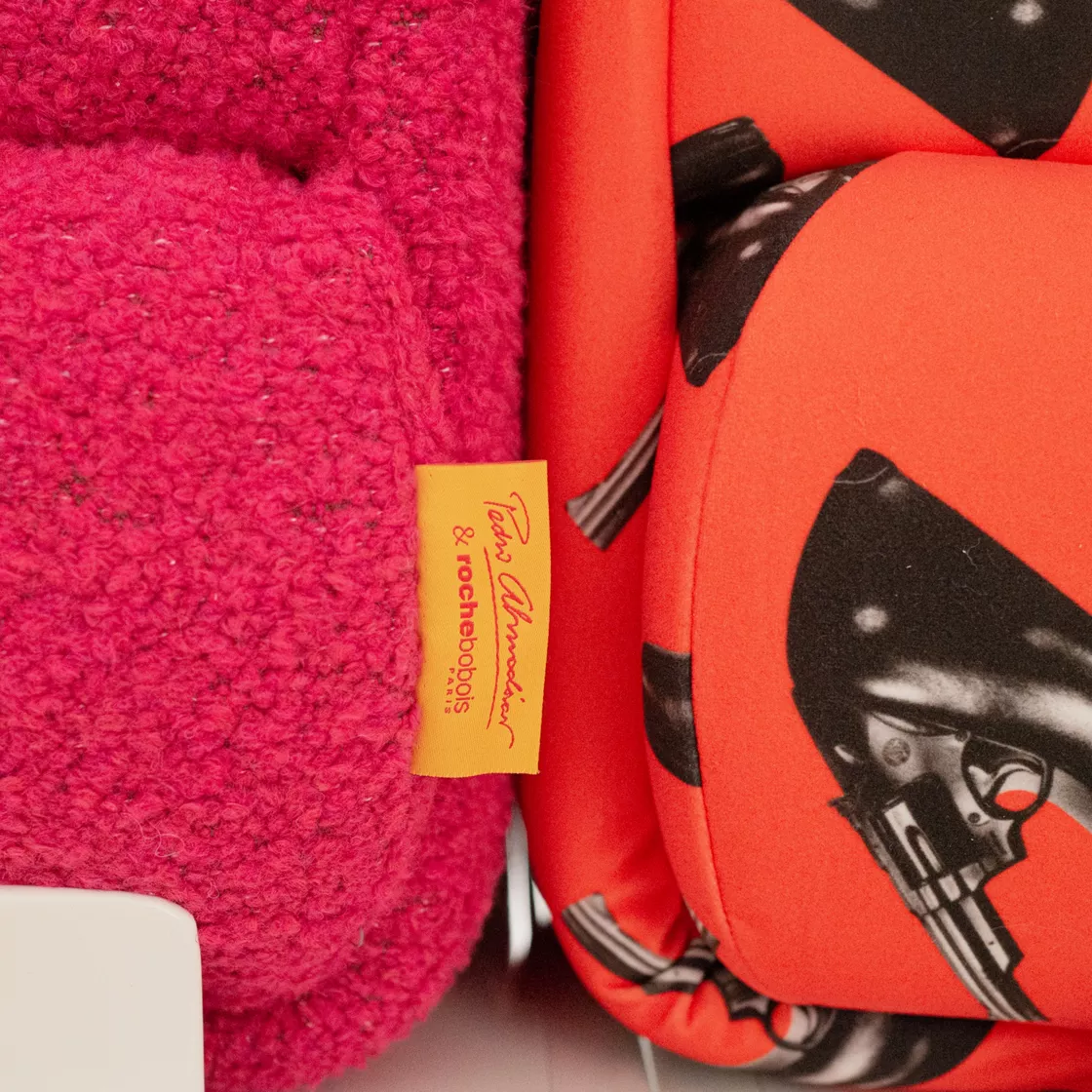
Roche Bobois's position as the pioneer of modular avant-garde seating - a position earned through 54 years of production on the Mah Jong without discontinuing or retiring the design - gives this palette argument a structural home it could not find in any other furniture object. The modular format means the color composition is user-configurable: the nine elements can be arranged corner-to-corner, in extended linear runs, or in distributed groupings across a room plan. The cinema comes with you wherever the modules go.